
A debt consolidation loan streamlines high-interest obligations—such as credit card balances, personal loans, and medical bills—into a single monthly payment with a predictable fixed interest rate. In 2026, top-rated lenders offer competitive APRs starting below 10%, flexible credit score tiers (from prime credit to bad credit with co-signers), zero origination fees, and direct payouts to creditors. By replacing multiple varying interest rates and due dates with a single structured payoff plan, borrowers can lower overall interest costs, protect their credit profile, and accelerate their journey toward becoming completely debt-free.
Juggling multiple monthly bills, varying due dates, and skyrocketing double-digit interest rates can quickly feel overwhelming. When high credit card balances, medical expenses, or personal loans consume a significant portion of your income, managing your money stops being about building wealth and turns into survival mode.
Fortunately, debt consolidation provides a structured way out. Taking out a single personal loan to pay off your outstanding high-interest balances allows you to streamline your monthly obligations into one fixed monthly payment, ideally at a significantly lower interest rate.
Whether you are looking for the best debt consolidation loans 2026 has to offer, trying to restore a lower credit score, or seeking ways to eliminate credit card interest once and for all, this comprehensive master guide breaks down everything you need to know from start to finish.
What Is a Debt Consolidation Loan and How Does It Work?
At its core, a debt consolidation loan is an unsecured personal loan designed specifically to replace multiple existing debts. Instead of writing checks to five or six different banks every month, you borrow a lump sum from a single lender, pay off all your individual balances, and then make a single installment payment to your new lender each month until the loan is fully repaid.
The Math Behind Consolidation Savings
Imagine you owe $15,000 across three credit cards with an average interest rate (APR) of 23%. If you only pay the minimum monthly amounts, it could take over 12 years to clear the debt, costing you more than $11,000 in interest alone.
If you consolidate that same $15,000 into a 3-year personal loan at a 10.5% fixed interest rate:
-
Monthly Payment: ~$487
-
Total Interest Paid: ~$2,548
-
Total Savings: Over $8,400 in interest saved, with a guaranteed debt-free date in 36 months!
1. Prime Credit & Low-Fee Consolidation Options
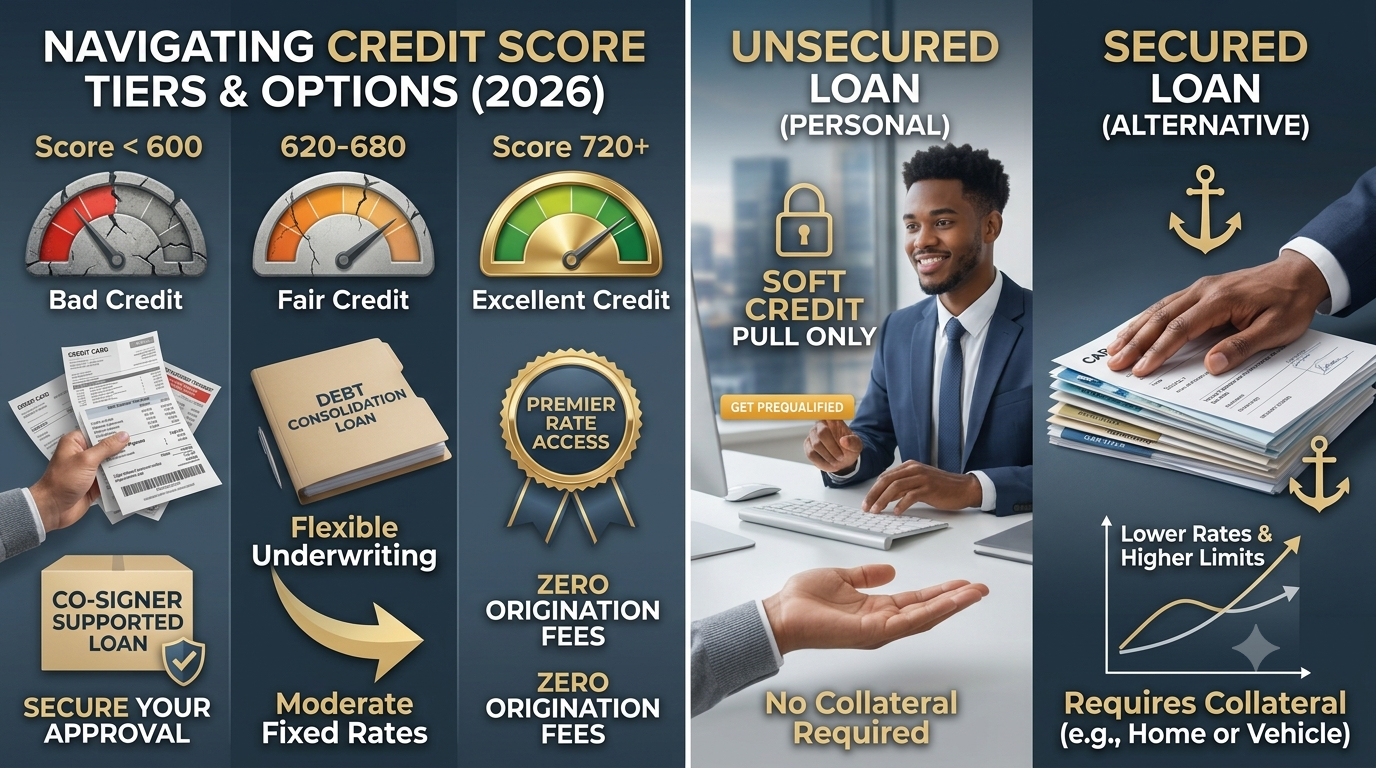
For borrowers with solid credit scores (700 and above), securing a consolidation loan is primarily about finding the absolute lowest annual percentage rate (APR) and avoiding unnecessary overhead costs.
Avoiding Origination Fees
An origination fee is an upfront administrative charge (typically 1% to 8% of the total loan amount) that lenders deduct from your payout before you receive the funds. If you have good to excellent credit, you should never have to pay this fee.
Always prioritize seeking the best low-interest debt consolidation loans with no origination fee. When you skip origination fees, 100% of the money you borrow goes directly toward wiping out your high-interest debt.
If you are carrying large balances across multiple accounts, look for lenders offering the lowest APR debt consolidation loans for $50k debt. High-limit loans with fixed interest rates give you the exact leverage needed to clear substantial debt without taking on dynamic rate increases down the road.
For prime borrowers who want complete financial clarity, exploring the best zero-fee debt consolidation loans for good credit ensures you pay zero application fees, zero origination charges, and zero prepayment penalties if you decide to pay off your balance early.
2. Tackling Credit Card Debt: Direct Payouts & Extended Terms
Credit card debt is one of the most common reasons borrowers seek consolidation. Credit card interest compounds daily, which means even a modest balance can quickly snowball out of control if you are only making minimum payments.
The Power of Direct Creditor Payouts
When consolidating credit cards, human psychology can sometimes present a challenge. If a lender deposits $20,000 directly into your checking account, there is always a slight temptation to use a portion of that cash for everyday living expenses instead of paying off your credit card issuers.
To eliminate this friction, look for lenders offering same-day approval, debt consolidation loans, and direct payout to creditors. With direct payout, your loan funds are sent electronically directly to your credit card companies. You don’t have to manage manual transfers, and your card balances are paid down automatically within 24 to 48 hours.
Finding the best credit card debt consolidation loans with low fixed-rate offers gives you peace of mind, knowing your monthly interest charge will remain identical from day one until your final installment.
Extending Loan Terms for Lower Monthly Payments
If your primary concern is immediate cash-flow relief, you may want to stretch your payment schedule across a longer window. Exploring debt consolidation loans with the lowest monthly payment terms, 84 months, allows you to spread out payments over seven years, significantly lowering your required monthly draft.
Advisor Insight: While an 84-month loan drops your required monthly payment to its lowest possible level, keep in mind that a longer loan term means paying interest over a longer duration. If you choose an extended term, try to make extra principal payments whenever you have spare cash to reduce overall interest costs!
For borrowers managing multiple revolving cards, reviewing the best balance transfer loans for consolidating multiple credit cards provides a clear comparative path between fixed personal loans and credit card balance transfers.
3. Debt Consolidation for Bad & Fair Credit (Under 680 Credit Score)
A common misconception is that you need flawless credit to qualify for a debt consolidation loan. In reality, many modern lenders specialize in working with fair-credit and bad-credit applicants, recognizing that high credit utilization is often the temporary cause of a lower credit score.
Fair Credit Strategies (620 to 680 Credit Score)
If your credit score sits in the fair credit range, you have access to a wide selection of mainstream online lenders. Target financial institutions that evaluate holistic factors—such as your employment history, educational background, and overall income stability—rather than relying strictly on a credit score number.
Researching the best debt consolidation loans for fair credit 620 to 680 will help you locate lenders that offer reasonable interest rates without requiring collateral.
Navigating Bad Credit Options (Under 600 Credit Score)
If your score has dipped below 600, you can still secure consolidation funding, though you must carefully evaluate interest rates and fee structures.
Be cautious when searching for the best debt consolidation loans for bad-credit-verified approval. In the financial industry, no legitimate, regulated lender can promise 100% “guaranteed approval” without first evaluating a borrower’s basic financial profile. Lenders making absolute promises often charge exorbitant fees or predatory interest rates.
Instead, seek out legitimate low credit score debt consolidation loans under 600 APR options that offer transparent terms and capped interest rates.
To boost your approval odds and lower your APR, consider applying for debt consolidation loans for a a 500 credit score with co-signer options. Adding a family member or trusted relative with strong credit as a co-signer reduces the lender’s risk, helping you unlock prime-tier interest rates even with a low personal credit score.
If you are concerned about strict credit checks altogether, explore legitimate credit-building lenders that offer alternative underwriting for no-credit-check debt consolidation loans and instant approval, and 2026 programs. These programs often evaluate your cash flow and active bank statements directly rather than relying solely on traditional credit bureau data.
4. Comparing Solutions: Personal Loans vs. Balance Transfer Cards
When deciding how to tackle debt, borrowers frequently ask whether they should use a personal loan or a 0% balance transfer credit card. Understanding fixed-rate debt consolidation loans vs balance transfer credit cards is critical for selecting the right tool for your specific financial situation.
When to Choose a Personal Loan
A debt consolidation loan is ideal if you owe a significant sum ($10,000 or more) and need several years of fixed, predictable payments to clear your debt completely without fear of sudden rate hikes.
When to Choose a Balance Transfer Card
A 0% APR balance transfer card works best if your total debt is smaller, your credit score is high enough to qualify for a high credit limit, and you are 100% confident you can pay off the full balance before the promotional 0% period expires.
5. Niche Consolidation Solutions for Specific Borrower Profiles
Financial needs vary significantly depending on your life stage, profession, and source of income. Tailoring your loan search to your specific demographic profile can help you uncover discounted rates and favorable underwriting rules.
Self-Employed & High DTI Applicants
If you run your own business, work as a freelancer, or work in the gig economy, proving steady income through traditional pay stubs can be challenging.
Applying for debt consolidation loans for self-employed high debt-to-income ratio scenarios requires lenders that accept tax returns, 1099s, or 12 months of business bank statements to verify cash flow rather than requiring standard W-2 pay stubs.
Borrowers looking for rapid processing can also look for the quickest personal loans to consolidate debt without income verification requirements, where open-banking instant bank verification tools automatically confirm income in real time.
Military Veterans & Active Duty Service Members
Active-duty military members, reservists, and veterans often have access to unique financial protections and specialized lenders.
Look for the best debt consolidation loans for military veterans and active duty personnel through military-focused credit unions and banks. These lenders often provide interest rate caps, reduced origination charges, and flexible hardship protections backed by the Servicemembers Civil Relief Act (SCRA).
Recent Graduates & Young Professionals
Graduating from college often comes with a mix of high-interest credit card debt, relocation expenses, and initial career setup costs.
Exploring the best debt consolidation options for recent college graduates allows young professionals to combine disparate short-term debts into a single, manageable monthly bill that fits their starting career budget.
Seniors on Fixed Income
Retirees living on Social Security, pensions, or investment disbursements need fixed, guaranteed monthly expenses that won’t fluctuate unexpectedly.
Selecting debt consolidation personal loans for seniors on fixed income ensures that loan approval is calculated against reliable retirement income sources rather than traditional employment, keeping monthly payments predictable and stress-free.
6. Emergency Debt & Special Debt Types
Not all debt comes from credit cards. High-interest medical bills, payday loans, and unmanaged personal loans can create severe financial strain if left unaddressed.
Medical Bills and Mixed Debts
Medical emergencies are rarely planned, and multi-provider billing can leave patients managing dozens of individual statements from hospitals, laboratories, and specialists.
Using the best debt consolidation loans for medical bills and personal loans allows you to combine scattered medical charges and existing unsecured loans into a single streamlined payment structure.
Escaping Payday Loan Traps
Payday loans are among the most dangerous forms of debt, often carrying annualized interest rates ranging from 300% to 500%. Borrowers who get caught in payday loan rollover cycles often end up paying double or triple what they originally borrowed.
Refinancing through payday loan consolidation, personal loans, and low-interest 2026 offers allows you to pay off predatory lenders immediately, substituting ultra-high-rate short-term debt with a standard, manageable installment loan.
Low-Income Emergency Options
If you are facing an unexpected job disruption or income reduction, finding emergency debt consolidation loans for low-income borrowers provides a critical lifeline. These loans focus on extending repayment terms to lower immediate monthly payment demands and keep your accounts in good standing.
How to Consolidate Debt Without Hurting Your Credit Score
One of the most common worries borrowers share is whether taking out a consolidation loan will damage their credit rating. The short answer: When done correctly, debt consolidation actually improves your credit score over time!
Here is a step-by-step breakdown of how to consolidate high-interest credit card debt without hurting credit:
Step 1: Utilize Soft-Pull Prequalification
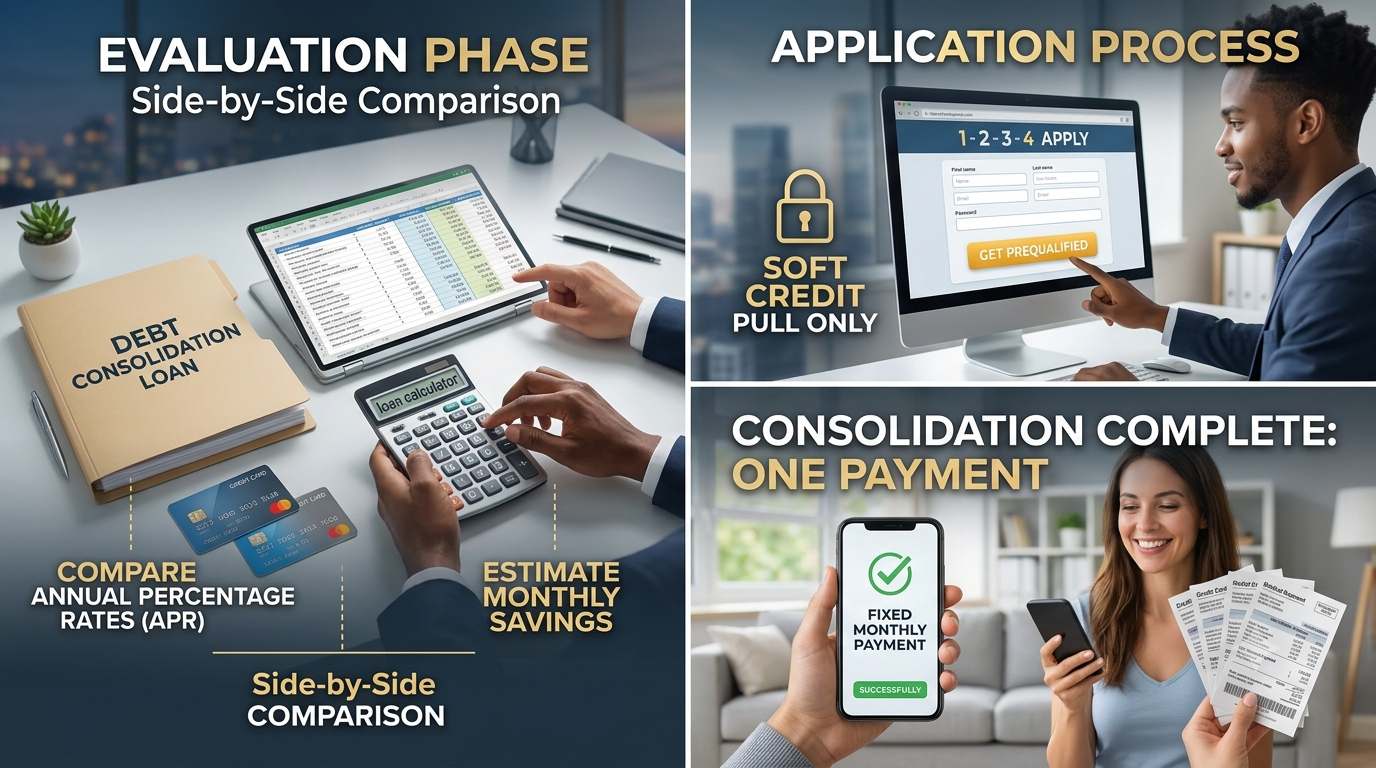
When shopping for loan rates, always use fast online debt consolidation loans instant soft pull prequalification tools. A soft pull allows lenders to display your estimated interest rate and maximum loan amount without adding a hard inquiry to your credit report.
Step 2: Minimize Revolving Credit Utilization
Your credit score is heavily influenced by your credit utilization ratio—the percentage of your available credit card limits currently in use.
-
When you take out a personal loan and pay off your credit card balances, your revolving credit utilization instantly drops toward 0%.
-
Because personal loans are classified as installment debt rather than revolving debt, this sudden drop in credit card utilization frequently triggers a noticeable bump in your credit score within 30 to 60 days!
Step 3: Keep Paid-Off Credit Cards Open
Once your consolidation loan pays off your credit cards, do not close those credit card accounts. Keeping those cards open maintains your overall available credit limit and preserves the average age of your credit accounts, both of which support a healthy credit score.
Step-by-Step Action Plan: How to Apply and Qualify in 2026
Ready to move forward? Follow this step-by-step advisor checklist to streamline your application and secure the best possible loan terms:
-
Inventory Every Debt: Build a simple spreadsheet listing each creditor, total balance owed, monthly due date, and current interest rate (APR). Sum up your total balance to determine the exact loan amount you need.
-
Shop Around via Prequalification: Compare prequalified offers across at least three online lenders, banks, or credit unions. Focus on comparing the APR, total repayment length, and whether origination fees apply.
-
Select Your Ideal Loan Structure: Choose a repayment tenure that offers a monthly payment comfortably within your budget. If you want to get out of debt quickly, select a shorter term (24–36 months). If you need maximum monthly cash-flow relief, choose a longer term (60–84 months).
-
Complete Verification Documentation: Once you choose an offer, submit your formal application. Prepare basic verification documents, including a government-issued photo ID, recent pay stubs or bank statements, and account statements for creditors receiving direct payouts.
-
Execute Payoffs and Establish Autopay: Once approved and disbursed, confirm that every underlying credit card or balance has been paid in full. Finally, set up automatic payments on your new loan to earn rate discounts (typically 0.25% to 0.50% off your APR) and ensure you never miss a payment deadline.
Expert Summary & Final Mindset Shift
A debt consolidation loan is one of the most effective tools available for taking control of your personal finances. It simplifies your financial life, lowers high-interest expenses, and sets a clear, guaranteed end date for your debt.
However, remember that a consolidation loan changes the structure of your debt, but you control your daily spending habits. To maintain long-term financial freedom:
-
Avoid new credit card charges once your old balances are cleared.
-
Build a modest emergency fund ($1,000 to $3,000) so unexpected expenses don’t force you back into credit card debt.
-
Celebrate each milestone as your single fixed loan balance steadily drops toward zero!
By matching your credit profile to the right lender, comparing fees carefully, and staying committed to your repayment plan, you can turn debt consolidation into the turning point of your financial journey in 2026.