
Getting out of debt isn’t just a math problem; it is a human behavior problem. The math is easy—spend less than you earn. But human habits, emotions, unexpected emergencies, and everyday stress are the real things standing in your way.
If you are reading this, you have probably decided that you are tired of losing a huge chunk of your paycheck to credit card companies, student loan servicers, or car payments. You have made the brave decision to start your journey to becoming debt-free.
But let’s be honest. Deciding to get out of debt is the easy part. The hard part is staying on the path when life throws a wrench into your plans. Along the way, you are going to hit some speed bumps. Sometimes, those bumps feel like massive brick walls.
Understanding the biggest roadblocks to paying off debt before you actually hit them is the secret to winning with money. If you know what is coming, you can map out a detour. Let’s break down the five most common traps that keep people stuck in a cycle of payments and exactly how you can drive right past them.
Roadblock #1: Driving Without a Map (Not Having a Plan)
Imagine trying to drive cross-country to a town you have never been to without a GPS, a map, or even road signs. You would end up lost, frustrated, and out of gas.
This is exactly what it is like trying to pay down balances without creating a realistic debt payoff plan. One of the main reasons why you can’t get out of debt is simply because you don’t know exactly where your money is going every month. You might be making payments here and there, throwing an extra twenty dollars at a credit card, but without a clear system, your progress will be painfully slow.
When we are in debt, our natural instinct is to hide from the numbers. Looking at our bank accounts causes anxiety, so we avoid it. We swipe our cards and just hope for the best.
How to Overcome It:
You have to shine a bright light on the scary monster under the bed.
-
Face the numbers: Sit down with a cup of coffee, take a deep breath, and write down every single debt you owe. Write down the total balance, the minimum monthly payment, and the interest rate.
-
Give every dollar a job: You need a budget. Before the month begins, write down your expected income and assign every single dollar to a specific category (rent, groceries, gas, and debt payments).
-
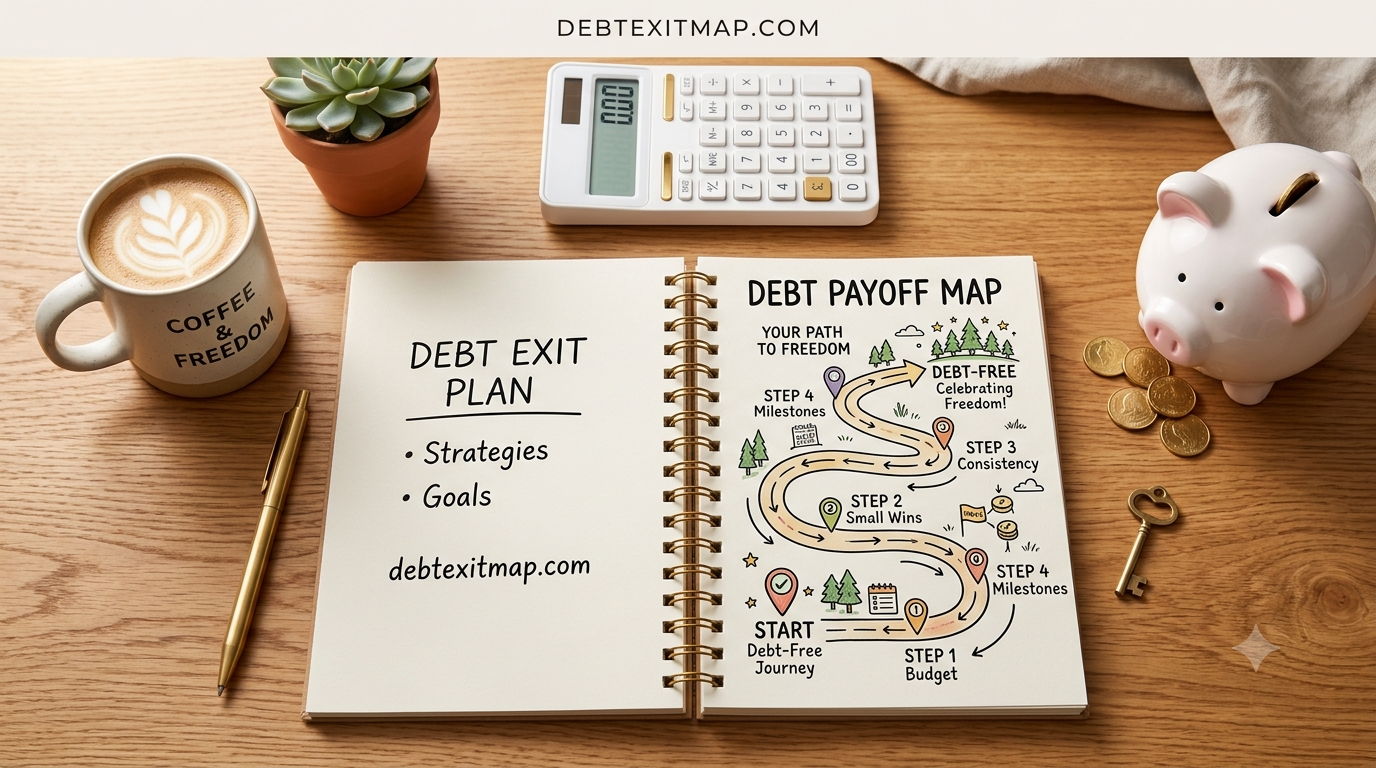
Pick your route: Decide if you want to pay off your smallest balances first to get quick wins (the Debt Snowball method) or pay off your highest interest rate debts first to save money (the Debt Avalanche method). Pick one and stick to it. This is your personal debt exit map.
Roadblock #2: The Unexpected Flat Tire (Having Zero Savings)
Here is a story that might sound familiar. You get super motivated. You slash your budget, stop eating out, and throw every single extra penny you have toward your credit card bill. You feel amazing!
Then, three weeks later, your car’s transmission starts making a funny noise. The mechanic says it will cost $600 to fix. Because you sent all your cash to your credit card company, your checking account is empty. So, what do you do? You put the $600 right back onto the credit card.
This cycle of paying down debt, having an emergency, and going right back into debt is exhausting. It is the quickest way to lose hope on your journey to becoming debt-free.
How to Overcome It:
You must pause your aggressive debt payments for a brief moment and focus on building an emergency fund while in debt.
I know it sounds backwards to save money when you are being charged interest on your loans, but you need a buffer between you and life. Life will happen. Kids get sick, appliances break, and cars get flat tires.
Before you start throwing all your extra cash at your debts, save up a starter emergency fund. For most people, $1,000 to $2,000 is the perfect amount to start. Keep this money in a separate savings account and promise yourself you will only touch it for a true, unpredictable emergency. A sale at your favorite clothing store does not count! This little cash cushion is your insurance policy against going further into debt.
Roadblock #3: The “I Deserve It” Trap (Emotional Spending)
We are humans, not robots. We have bad days at work, we fight with our partners, and we get stressed out by the news. When we feel bad, we look for ways to feel better. For many of us, spending money provides a temporary, instant rush of happiness.
This is called emotional spending, and it is a massive roadblock on your journey to becoming debt-free.
Maybe it’s ordering expensive takeout because you are too tired to cook, or buying a new gadget because you had a terrible week at the office. We tell ourselves, “I work hard, I deserve a little treat.” The problem is, those little treats add up, and the happiness fades the moment the credit card bill arrives, replacing that joy with guilt.
How to Overcome It:
Learning how to stop emotional spending requires you to pause and investigate your feelings before you swipe your card.
-
The 48-Hour Rule: If you see something you want to buy that isn’t a planned necessity (like groceries or medicine), force yourself to wait 48 hours. Put the item in your online cart and walk away. Usually, after two days, the emotional urge to buy it has completely passed, and you will realize you don’t actually need it.
-
Find free joy: Make a list of things that make you happy but cost absolutely zero dollars. This could be taking a walk listening to your favorite podcast, taking a long hot bath, calling a friend, or re-watching your favorite movie. When you feel the urge to spend because you are stressed, look at your “free joy” list first.
-
Unfollow temptation: If certain social media influencers or brand emails always convince you to buy things you don’t need, hit the unsubscribe button. Protect your peace and your wallet.
Roadblock #4: The Marathon Wall (Debt Fatigue)
Getting out of debt is not a sprint; it is a marathon. Depending on how much you owe, your journey to becoming debt-free could take months or even years.
When you first start, you are full of energy and motivation. But six months down the line, when you are eating leftovers for the fourth night in a row and turning down dinner invitations from friends because it’s not in the budget, you are going to hit a wall. You will start to wonder if it is really worth all this sacrifice. This is called debt fatigue.
Losing your drive is one of the biggest roadblocks to paying off debt because it leads to “falling off the wagon” and completely abandoning your financial goals.
How to Overcome It:
Figuring out how to stay motivated while paying off debt is all about breaking a massive goal into tiny, bite-sized pieces and celebrating along the way.
-
Track your progress visually: Create a visual reminder of your journey. Draw a thermometer on a piece of paper, put it on your fridge, and color it in every time you pay off $100 or $500. Seeing that visual progress every single day reminds your brain that your sacrifices are actually working.
-
Celebrate the milestones: You don’t have to wait until you are 100% debt-free to celebrate. Did you just pay off your very first credit card? Celebrate! Treat yourself to an affordable dinner out, or buy that fancy coffee you have been avoiding. Build small, budget-friendly rewards into your debt exit map, so you have things to look forward to.
-
Remember your “Why”: Why did you start this journey in the first place? Do you want to buy a house? Do you want to be able to stay home with your kids? Do you just want to sleep peacefully at night without worrying about money? Write your “why” down and look at it whenever you feel like giving up.
Roadblock #5: The Silent Struggle (Doing It Alone)
Money is still one of the biggest taboo topics in our society. We will gladly talk to our friends about our health, our relationships, and our struggles at work, but we clam up the second the topic turns to money.
Many people carry deep shame about their financial situation. Because of this, they try to embark on their journey to becoming debt-free completely in secret. They don’t tell their friends why they are suddenly declining invitations to go out. Sometimes, they even hide the true extent of their debt from their spouse or partner.
Trying to climb a mountain alone is dangerous and lonely. Without a support system, it is incredibly easy to justify quitting.
How to Overcome It:
You need a cheerleading squad. You need accountability.
-
Get on the same page as your partner: If you are married or sharing finances with someone, you cannot fix this alone. You must sit down, be totally honest about the numbers, and work as a team. It might be a difficult conversation at first, but tackling the problem together will strengthen your relationship and double your debt-paying power.
-
Tell a trusted friend: You don’t have to announce your bank account balances to the world, but confiding in one or two close friends can lift a massive weight off your shoulders. Just saying, “Hey, I’m really trying to focus on getting out of debt right now, so I’m on a strict budget,” helps them understand your choices. You might even inspire them to look at their own finances!
-
Find an online community: If you aren’t ready to talk to people in real life, the internet is full of amazing communities. Look for debt-free community hashtags on social media, join personal finance forums, or leave comments here at Debt Exit Map. Surrounding yourself (even virtually) with people who have the same goals will keep you inspired.
The Road Ahead
Your journey to becoming debt-free will not be perfect. You might hit one of these roadblocks, stumble, and overspend one month. That is perfectly okay. The goal is not perfection; the goal is persistence.
If you make a mistake, don’t use it as an excuse to give up completely. Just acknowledge it, forgive yourself, adjust your budget, and get right back on the road tomorrow.
You have the power to change your family’s financial future. Grab your map, start the engine, and let’s get out of debt together.